Tools
Incoterms® 2020
International Commercial Terms for Global Trade Operations
Current Standard
Incoterms® 2020 is the official framework established by the International Chamber of Commerce (ICC) for international trade.
Key Updates (2010 vs 2020):
- Replaced DAT with DPU (Delivered at Place Unloaded).
- Updated insurance requirements for CIP & CIF.
- Enhanced security obligations and FCA transport options
EXW
Ex Works
MULTIMODAL
- Delivery: At the seller’s facility (factory, warehouse, etc.).
- Risk & Costs: Fully assumed by the buyer from the moment goods are made available.
- Transport: Applicable to any mode of transport. The buyer manages all logistics and customs.
FCA
Free Carrier
MULTIMODAL
- Delivery: To the carrier or named place designated by the buyer in the country of origin.
- Risk & Costs: Transfer to the buyer upon delivery to the agreed carrier.
- Transport: Multimodal. Seller handles export customs clearance.
CPT
Carriage Paid To
MULTIMODAL
Delivery: Seller pays for transport to the agreed destination point.
Risk Transfer: Transfers to the buyer as soon as goods are delivered to the first carrier.
Transport: Multimodal. Main carriage is paid by the seller.
CIP
Carriage and Insurance Paid To
MULTIMODAL
Delivery: Seller pays for transport to the named destination.
Insurance: Seller is required to obtain high-level coverage (Clause A) for the buyer.
Risk Transfer: Passes to the buyer upon delivery to the first carrier.
DAP
Delivered at Place
MULTIMODAL
- Delivery: At the named destination point, ready for unloading.
- Risk & Costs: Seller bears all risks and costs up to the arrival at destination.
- Import Clearance: Handled and paid by the buyer.
DPU
Delivered at Place Unloaded
MULTIMODAL
Delivery: At the named place of destination, unloaded from the transport vehicle.
Risk & Costs: Seller assumes all costs and risks, including unloading the goods.
Note: Replaced DAT in the 2020 revision.
DDP
Delivered Duty Paid
MULTIMODAL
- Delivery: At the buyer’s requested destination, fully cleared for import.
- Risk & Costs: Maximum responsibility for the seller, covering transport, duties, and taxes.
- Import Clearance: Fully handled and paid by the seller.
FAS
Free Alongside Ship
SEA & WATERWAY
Delivery: Alongside the vessel chosen by the buyer at the named port of shipment.
Risk & Costs: Transfer to the buyer once goods are placed alongside the ship.
Customs: Seller clears goods for export.
FOB
Free on Board
SEA & WATERWAY
Delivery: Loaded on board the vessel nominated by the buyer at the port of origin.
Risk & Costs: Transfer to the buyer once the goods are safely on board.
Customs: Export clearance handled by the seller; freight paid by the buyer.
CFR
Cost and Freight
SEA & WATERWAY
- Delivery: On board the vessel at the port of origin.
- Freight: Seller pays the sea freight costs to the named port of destination.
- Risk Transfer: Passes to the buyer as soon as the goods are loaded on board.
CIF
Cost, Insurance and Freight
SEA & WATERWAY
- Delivery: On board the vessel at the port of origin.
- Freight & Insurance: Seller pays sea freight and contracts minimum insurance (Clause C).
- Risk Transfer: Passes to the buyer upon loading on board the ship.

RIGID TRUCK
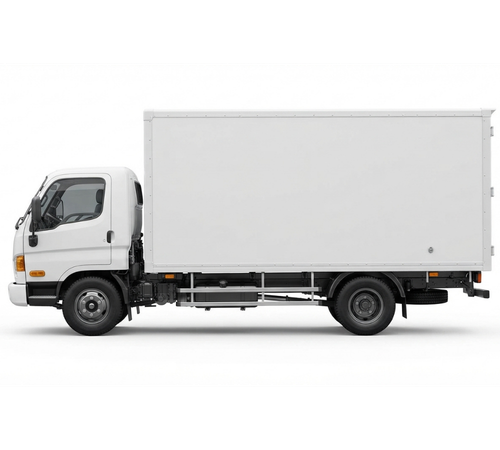
In "rigid trucks" the box cannot be separated from the cab (where the driver unit is located); they can have two, three, or more axles. They are designed to transport relatively light cargo over short or medium distances. Generally, they are used to transport smaller loads, fragile cargo, furniture, household items, groceries, health supplies, clothing, and for local distribution, removals, or emergency services.
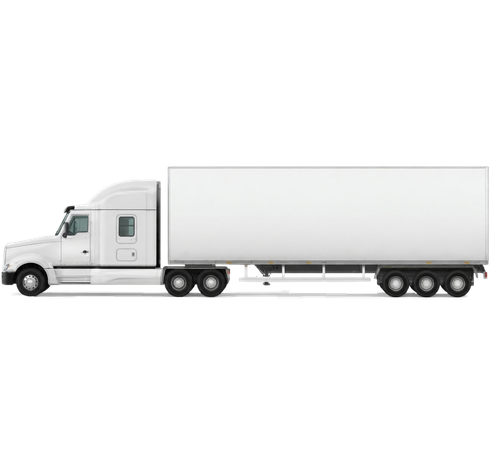
ARTICULATED TRUCK
An "articulated truck" consists of a tractor unit paired with a semi-trailer. They are designed for long distances and heavy cargo transport, handling both liquid and dry bulk materials, containerized freight, dry vans, and large-scale distribution boxes.
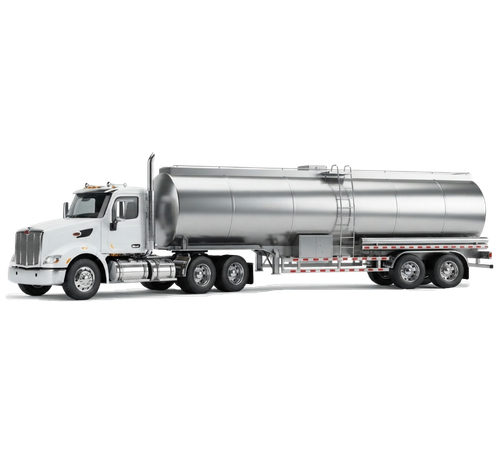
TANK TRUCK
A "tank truck" (or tanker) is designed for the bulk transport of liquid products, chemicals, and liquefied gases. They are utilized extensively for distributing water, liquid fuels such as gasoline and kerosene, industrial chemicals, and liquefied petroleum gas (LP gas). Tankers feature specialized cylindrical containment structures engineered to handle fluid shifting, pressurization, and safe transit of hazardous or non-hazardous bulk liquids.
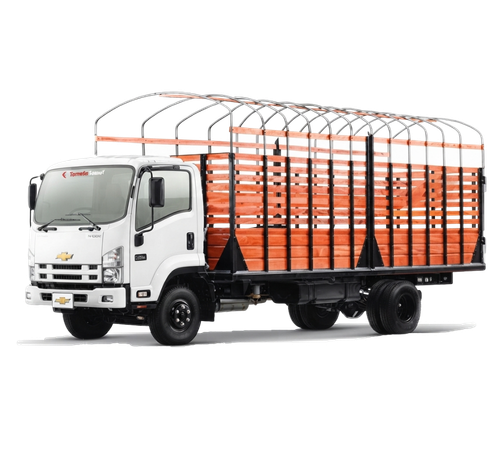
STAKE TRUCK
An "articulated truck" consists of a tractor unit paired with a semi-trailer. They are designed for long distances and heavy cargo transport, handling both liquid and dry bulk materials, containerized freight, dry vans, and large-scale distribution boxes.
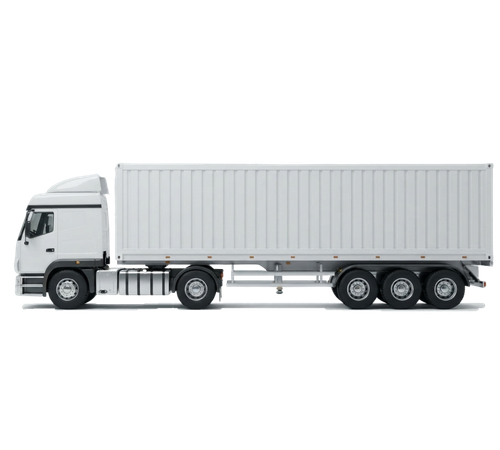
REFRIGERATED TRUCK
A "refrigerated truck" (or reefer truck) is used to transport temperature-sensitive perishable goods utilizing an integrated insulated body and a mechanical cooling system. They maintain precise temperature control typically ranging from +25 °C to -25 °C, making them essential for carrying fresh foods, pharmaceuticals, and frozen goods.
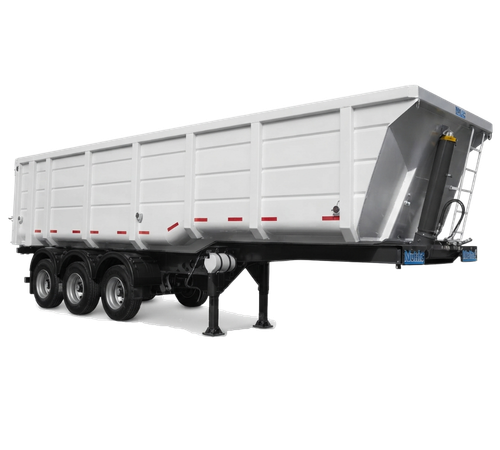
TIPPER / HOPPER TRUCK
An "articulated truck" consists of a tractor unit paired with a semi-trailer. They are designed for long distances and heavy cargo transport, handling both liquid and dry bulk materials, containerized freight, dry vans, and large-scale distribution boxes.
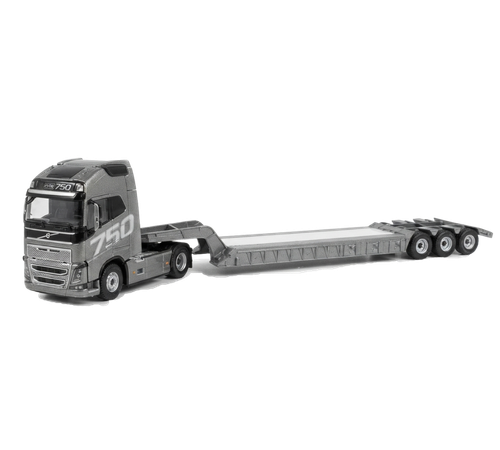
LOW BED (LOWBOY)
A "low bed" trailer (also known as a lowboy) is specialized equipment featuring an exceptionally low deck height, ideal for the safe transport of heavy machinery, construction equipment, oversized vehicles, and industrial tools. Typical load capacities range from 20 to 80 tons for standard configurations, making them essential for moving heavy and out-of-gauge loads securely.
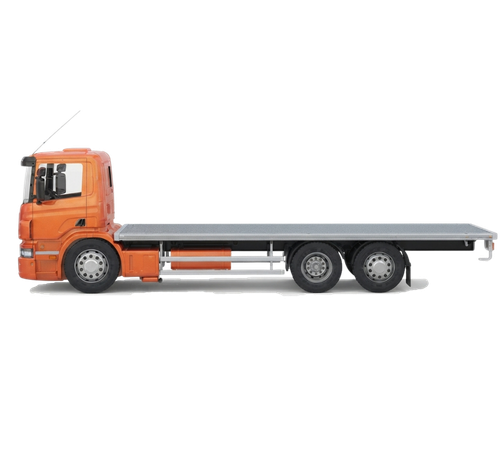
FLATBED / PLATFORM TRUCK
A "platform truck" (or flatbed truck) features an open, flat body without sides or a roof, designed for the versatile transport of heavy, oversized, or irregularly shaped cargo such as construction materials, structural steel, timber, and heavy machinery that requires flexible side or crane loading.